Singing in 16 Languages: International Choir “Zima” from Bar Brings People Together from All Over the World
Varvara Loyko came to Bar 18 years ago, where she built a life, but also an artistic community — the “Zima” choir, which breaks down boundaries and barriers of difference, achieves successes and brings musicians together…
It all began more than a decade ago, out of a great love for music, and Varvara says that culture is not a local phenomenon and does not end at the geographical borders of a city or a country.
Marija Pešić — Vijesti, 04.10.2026
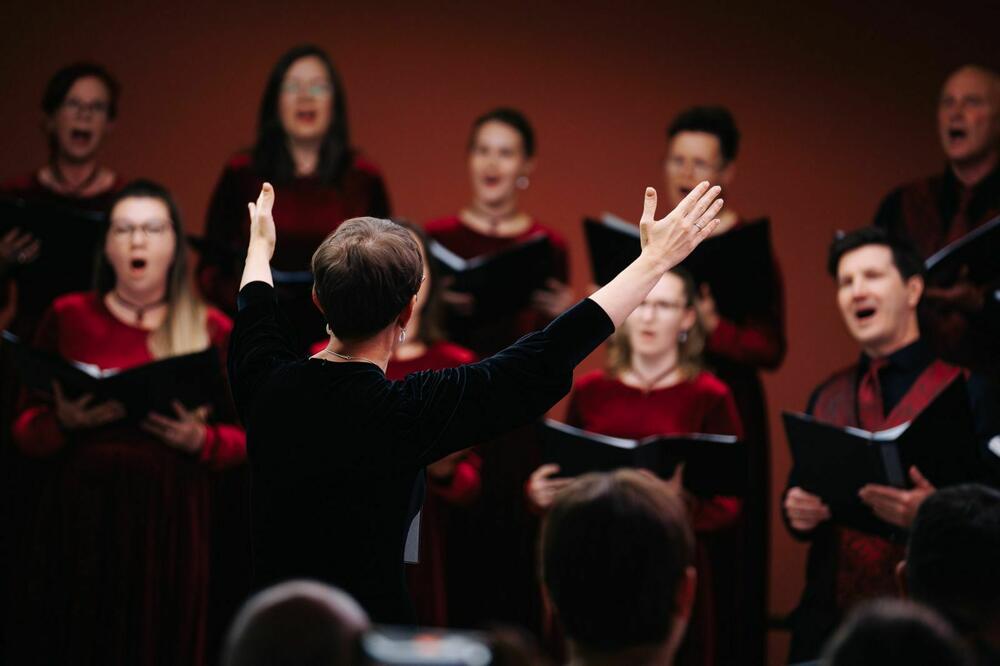
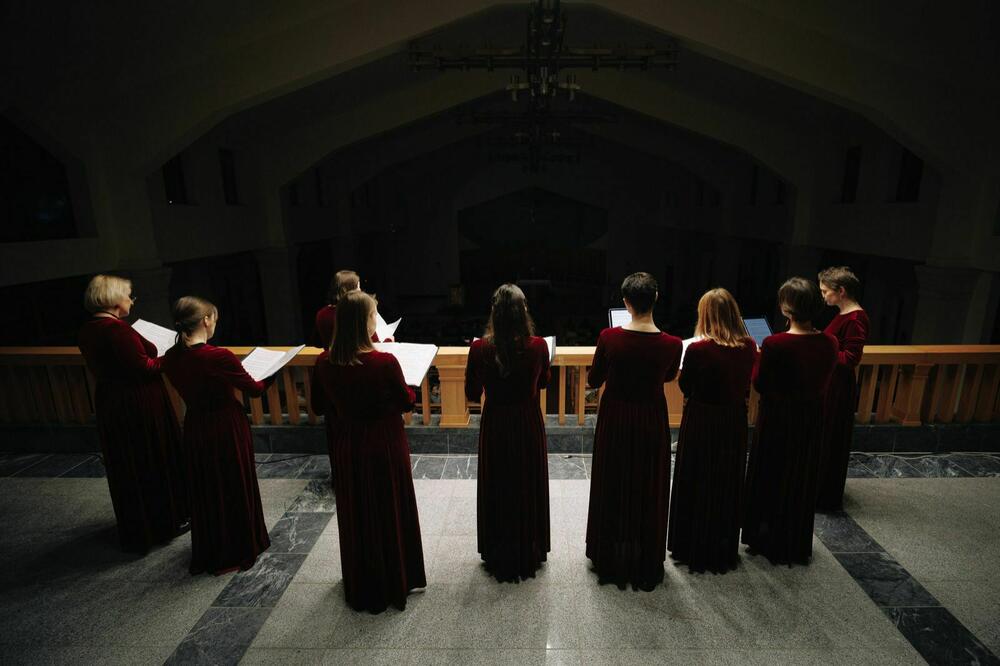
In a city where every sixth resident is a foreign citizen, one choir has been bringing together people who arrived in Bar from different countries for more than a decade. In “Zima,” their nationalities have gradually become less important than what they do together: they listen to one another, learn and sing in 16 languages.
Conductor Varvara Loyko tells “Vijesti” that this is precisely the essence of the choir — to be part of something larger without losing your own voice.
When people of different nationalities, generations and cultural habits come together in one place, one might expect their differences to be the most interesting part of the story, but in the Bar choir “Zima,” almost the opposite has happened: after years of rehearsals, concerts and travel together, the members have become so accustomed to those differences that they hardly notice them anymore, while continuing to achieve successes and receive recognitions and awards…
Bar is a city where migration has long ceased to be an exception, and according to the results of the 2023 census, 7,534 foreign citizens lived in the municipality, making up 16.4 percent of the population.
For Varvara, who herself came to Bar from Russia and built her life there, the fact that “Zima” consists of people of different origins is no longer something that defines the choir because, as she says, they have created a community in which this has simply ceased to be important.
She has lived in Bar for eighteen years, which is a huge part of her life, since she has spent practically her entire conscious adult life there. She came after university and, as she herself says, chose Bar once and never regretted it, and now, after so many years, she has the feeling that the city chooses her every day.
“This is my city. Not in the sense of belonging or ownership, of course, but in the sense of my responsibility toward it, my attachment to the people who live here, and my desire to give it back at least a part of what it has given me. I built my life here. I met my husband here, my son was born here, and ‘Zima’ and all the projects that later grew out of it were created here,” Varvara said.
She believes that no city has done more for her, which is why it feels completely natural to her to try to do something for it.
Varvara grew up in a family of musicians who advised her to be “anything but a musician.” She earned a master’s degree in law and worked in that field for years, but music refused to remain merely a hobby, so she says she thinks it is actually impossible to walk away from music.
“It has always been with me, and I never stopped engaging with it for any extended period of time. At the same time, it is very important to me that I had the opportunity to develop in completely different fields as well — today that experience helps me greatly in everything I do in music,” she said, noting that perhaps this is one of its beauties: even when you are not actively involved in music during some period of your life, it somehow continues to travel with you and “is ready to accept you again precisely when you need it.”
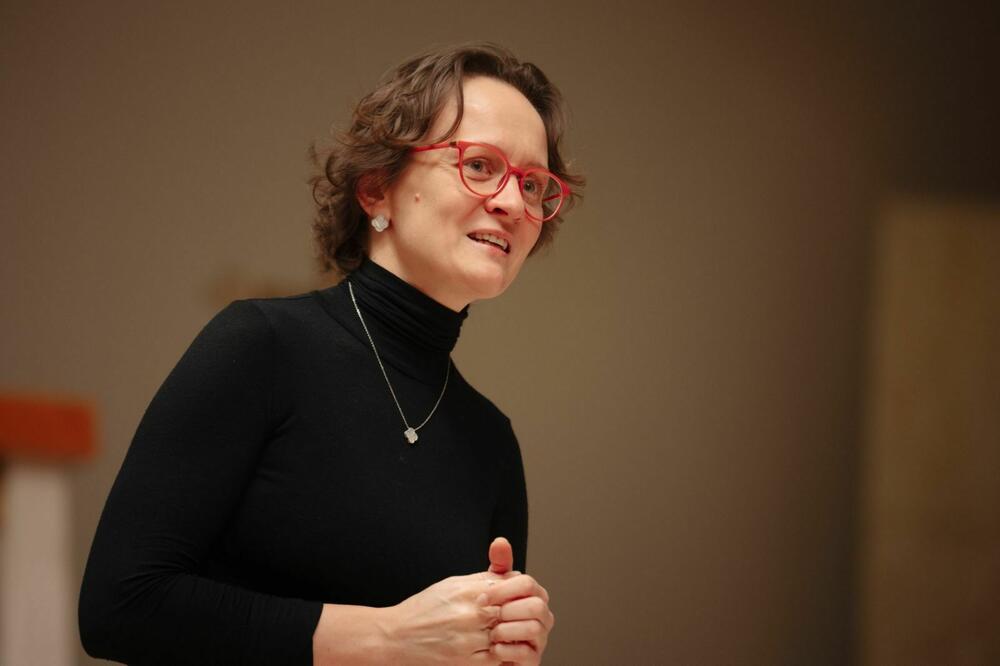
As for the “Zima” choir, she says that everything began 11 years ago — out of a great love for music, and at the time none of them could have imagined either that the story would last so long, that they would sing serious academic repertoire, or that they would perform at international festivals. She adds that, fortunately, they had an enormous amount of enthusiasm, which at the time quite successfully made up for their lack of professional experience.
LANGUAGE AS A PATH TO CULTURE
Over more than a decade of work, “Zima” has won silver and bronze awards at the international choir competition in Herceg Novi, the Gold Plaque of the international festival in Kikinda, recognition from the Niš Choral Ceremonies for performing Montenegrin choral music, and a Special Charter from “Mokranjac Days” for performing the music of Sergei Taneyev.
Over those years everyone grew — both the choristers and Varvara — while the role of the conductor, she said, has in fact not changed very much, adding that only from the outside does it look as though a conductor stands in front of a choir and waves their hands. The most important part of the work is something else: to close your eyes, constantly hear the sound you are moving toward, and see the choir you want to have in front of you one day, and then, rehearsal by rehearsal, try to reach it together.
Although it is becoming increasingly difficult to attract people to choral singing, and although the former tradition of choirs existing within schools, universities and institutions is slowly disappearing, Varvara says that music is valuable to her in itself, but is also an incredible instrument for getting to know oneself.
Singing together has well-documented effects on a sense of well-being, she noted, but for her something else is nevertheless most important — a choir allows you to be part of something greater than yourself while still not losing your own voice.
“I think what we are really missing today is precisely that feeling of belonging to a good group of people, to a community with which we share something important. In a choir, for a few hours, we can set aside nationalities, differences in mentality and everyday culture. We have a common goal, we listen to one another and create something that none of us can create individually,” she said, adding that as a bonus there is the feeling of taking part in creating something beautiful.
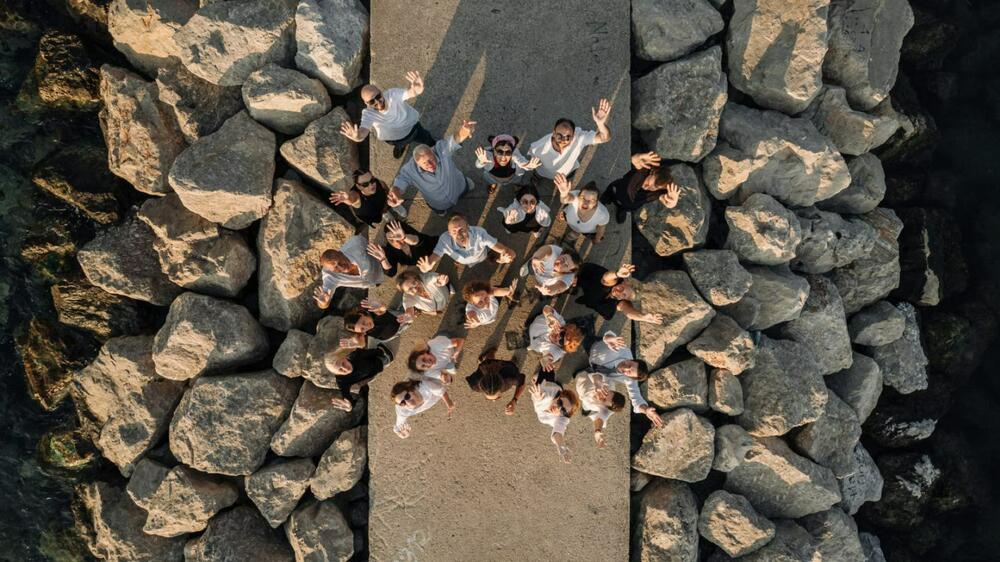
Varvara believes it is very characteristic that such a choir emerged precisely in Bar, since the city beneath Rumija “has always been a meeting place for different cultures, and the city grew and continues to grow thanks to people who come here to live.” She points out that the level of tolerance is very high and believes that this is precisely why people move there.
For her, the fact that people of different nationalities, generations and cultural backgrounds sing in “Zima” is actually just a beautiful detail in the choir’s biography, and she says they have become so accustomed to it that they no longer even think about it because they have created a community in which it has simply ceased to be important. With languages, however, it is different.
“We deliberately try to perform music in the language in which it was written. It is not always easy, but language is part of the music itself, and through it we can come closer to the culture from which the work emerged, to the way the composer heard the text, to its rhythm and sound. There is a special beauty in that,” the interviewee explained.
BAR LACKS CONTINUITY
Varvara launched the “Darovi Božića” music festival in Bar, while the “Zima” NGO, which she heads, also organizes the International Choral Festival “Sotto Voce” at the Co-Cathedral of St. Peter, and is currently coordinating the “Urban Winds Bar” project, aimed at connecting musicians from the territory of the Municipality of Bar.
Asked whether all these projects actually stem from the same idea — that the city needs more than individual concerts, namely a community of people who will create music together — she answers: absolutely.
A concert or festival is only the visible part of cultural life, she emphasizes, while music is actually created between concerts — at rehearsals, in encounters, through continuous work, and in order for new projects to grow out of that work and existing ones to survive, a cultural environment is needed. Varvara says that “nothing grows on bare ground.”
That is why encounters with other choirs and musicians are important to them, because they expand not only professional opportunities but, above all, the boundaries of thinking, and the interviewee stresses that culture is not a “local phenomenon and does not end at the geographical borders of a city or a country.”
She believes she cannot seriously engage with music without knowing what her colleagues in other communities are doing, without meeting them, listening to one another and exchanging experiences.
“In the cultural life of Bar, what I perhaps miss most is precisely that continuity — constant activity from which new projects can naturally grow and existing ones can become sustainable. I would like us not to think only from concert to concert, but to build an environment in which it is normal to be constantly creating music,” she said.
“Urban Winds” is another step in that direction, an attempt to find the people who already exist in Bar — professionals, amateurs, those who actively play and those whose instrument may have been sitting in its case for years — and connect them. She emphasizes that it is important first to create an environment in which something new can actually emerge.
“I think what we are really missing today is precisely that feeling of belonging to a good group of people, to a community with which we share something important. In a choir, for a few hours, we can set aside nationalities, differences in mentality and everyday culture. We have a common goal, we listen to one another and create something that none of us can create individually.”
An Instrument Every Child Has
For the music scene in Bar to develop, it is necessary to create new professionals, which also means involving young people.
Varvara believes that children should not be introduced to music only through listening, but above all through direct participation in its creation — producing sound, feeling rhythm and learning to make music with others.
She would like society to move from the idea of passively listening to music toward actively participating in its creation because, as she says, a child gets to know the world through direct experience. Therefore, the child should be given the opportunity to produce sound, feel rhythm, listen to others…
“Expensive instruments or special equipment are not necessary, because we already carry our own instrument with us — our own voice. This is probably one of the most accessible and democratic ways for music to truly enter a child’s life,” the newspaper’s interviewee says, concluding that this is where we return to the choir as the most universal form of making music together and probably one of the most accessible and democratic ways for music to truly enter a child’s life.